
Empowering the Shop Floor: Why Human-in-the-Loop AI is the Need of the Hour

The modern manufacturing shop floor is drowning in data but starving for actionable insights. While industrial control systems track thousands of sensor tags every second, bridging the gap between raw data and proactive operations remains a critical challenge.
The solution isn’t fully autonomous AI that removes humans from the equation. The true need of the hour is Human-in-the-Loop AI assistants, which democratise data access, eliminate technical barriers, and exponentially boost shop floor productivity. Modern historian platforms like Factorian prove that merging human institutional knowledge with conversational AI transforms manufacturing from a reactive scramble into a proactive strategy.
The Myth of Replacement vs. The Reality of Empowerment
Many companies are making the mistake of trying to replace their frontline workforce with autonomous AI agents. This approach will fail to deliver the desired efficiency because data lacks context without human experience. True transformation happens when you empower your existing workforce with AI assistance.
Key Workforce Satisfaction Metrics
- Reduced operational burnout: AI eliminates mundane shifting through historical databases.
- Higher problem-solving focus: Shifts engineer mindsets from data collectors to diagnostic experts.
- Enhanced skill confidence: Frontline operators solve complex technical deviations without waiting for data analysts.
- Accelerated knowledge retention: Institutional knowledge stays on the floor as AI retains past human troubleshooting steps.
Strategic Training Framework for Industrial AI
Instead of replacing staff, companies must invest heavily in upskilling their workforce with AI tools:
- Natural language command mastery: Teach technicians how to frame precise operational prompts.
- SPC template interpretation: Train operators to read AI-generated moving range (MR) and control charts.
- Self-service creation of simple AI agents: Companies should run workshops where operations and maintenance teams learn to build their own AI agents that can assist them with real time alerts or alarms.
- Feedback loop contribution: Educate teams on how to interpret and/or correct AI assumptions/hallucinations and in the long run help improve LLM models.
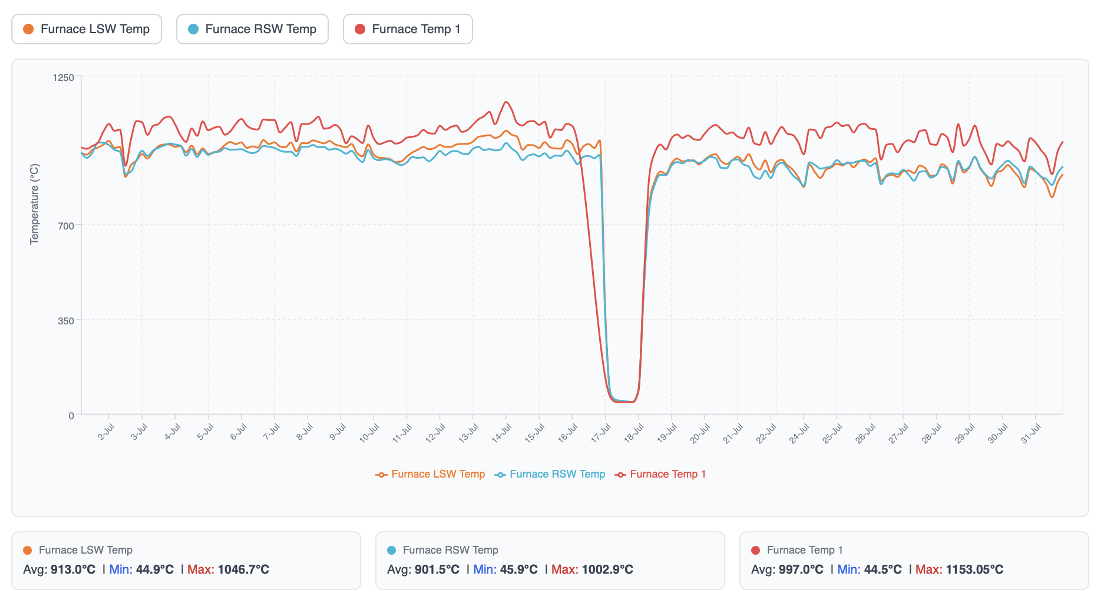
1. Real-Time Tracking with Live Trends
Traditionally, pulling a live trend requires complex knowledge of historians or specialised SCADA software. Human-in-the-Loop AI changes this by enabling personnel to see what is happening right now through continuous stream monitoring.
- Instant visualisations: Spot immediate sensor anomalies as they happen.
- Dynamic threshold alerts: Track critical variables like boiler drum pressure or furnace temperatures on a live axis.
- Contextual event mapping: Overlay ongoing shift activities directly onto real-time sensor streams.
2. Instantly Generated Aggregated Summary Stats
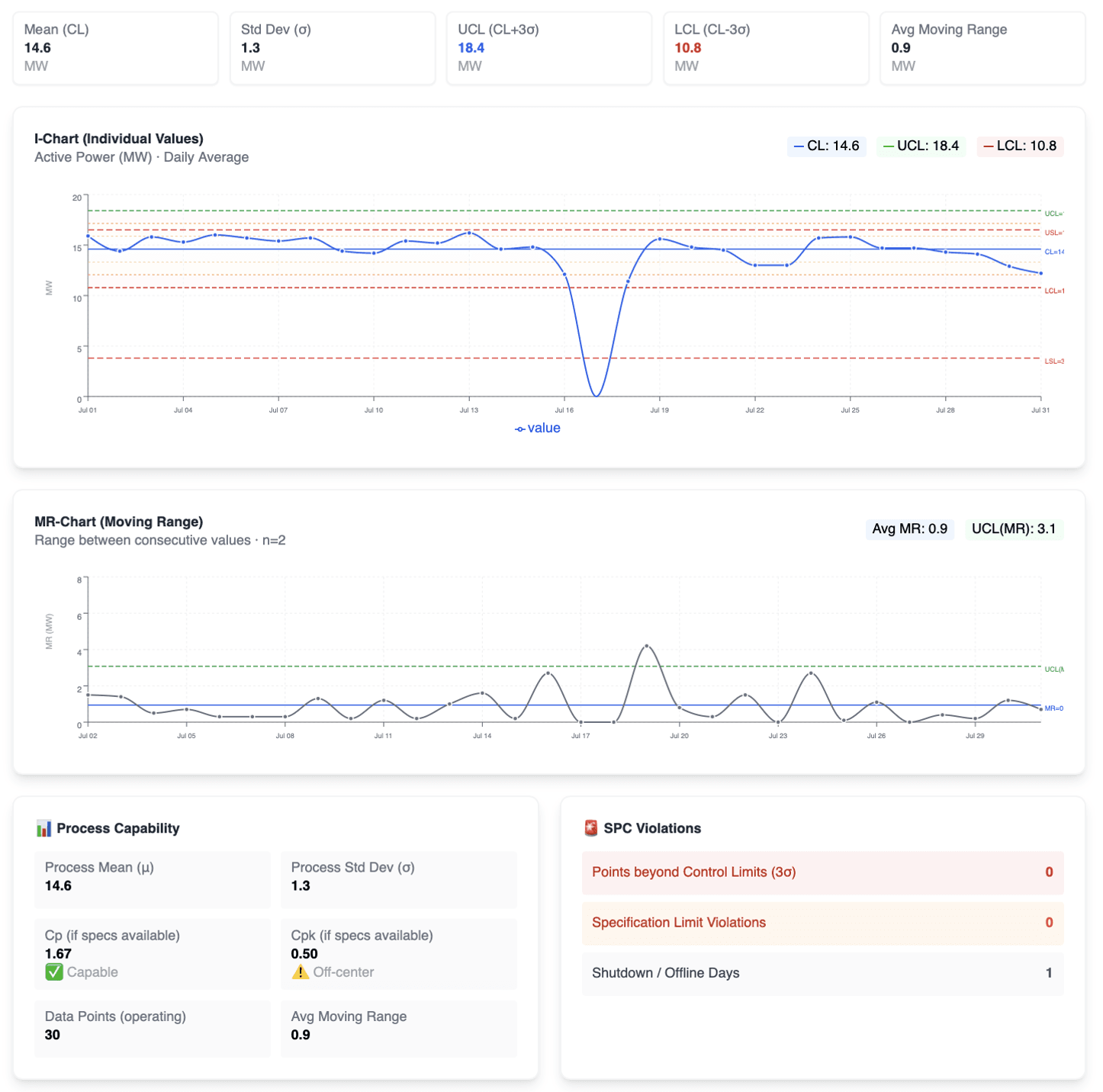
When a shift ends, supervisors often spend hours calculating metrics. AI engines eliminate this overhead by instantly computing statistical parameters over arbitrary ranges.
- Automated control charts: Generate individual value (I-charts) and moving range (MR-charts) configurations seamlessly, as shown in the Factorian SPC templates.
- Process capability insights: Calculate Cp and Cpk values automatically to measure exact quality boundaries.
- Multi-tag calculation: Extract mathematical averages, minimums, maximums, and standard deviations with zero manual Excel work.
3. Identifying Long-Term Historical Trends
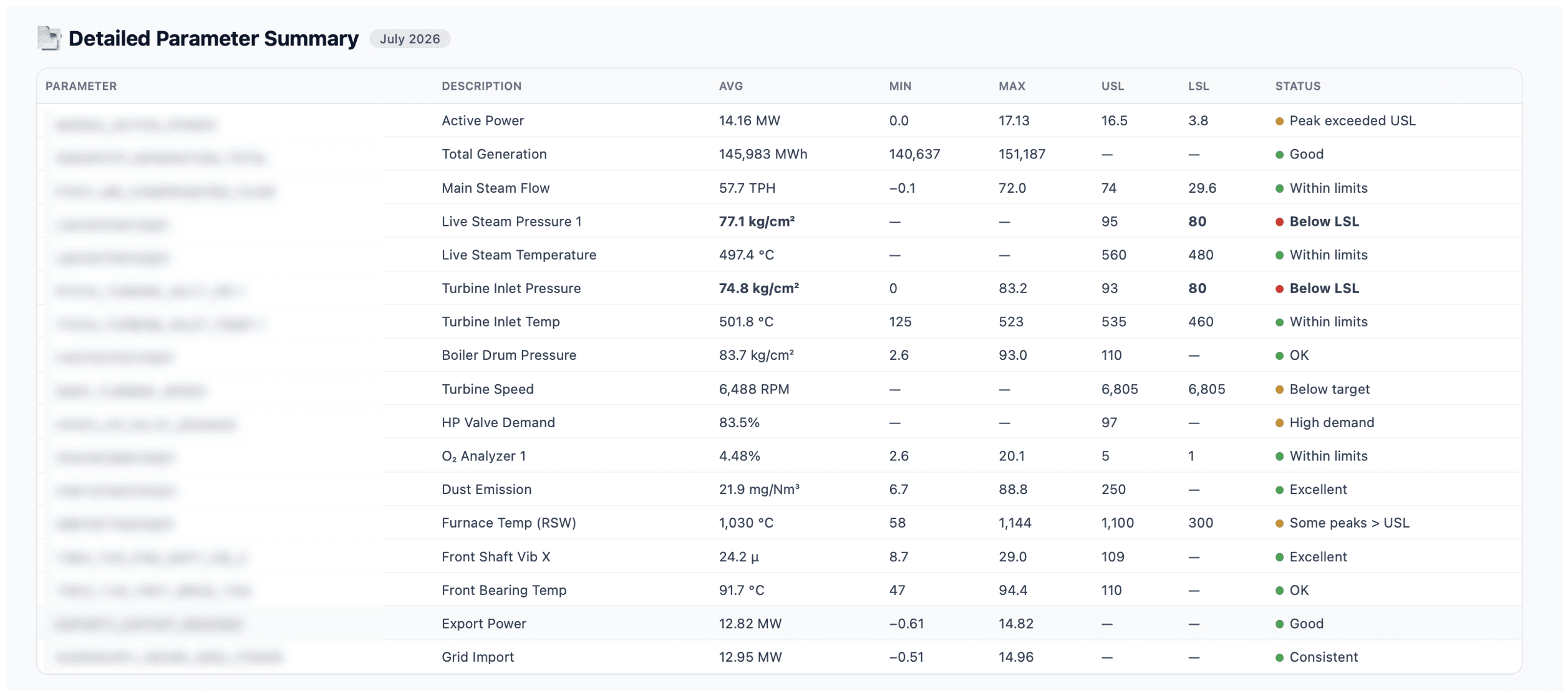
Industrial assets don’t fail suddenly; they degrade over weeks. AI assistants allow operators to cross-reference months of historical data to pinpoint the root causes of anomalies.
- Cross-month plotting: Compare multi-week operational parameters side-by-side.
- Degradation signatures: Identify subtle performance drops, such as gradual active power losses alongside rising oxygen levels.
- Outage impact correlation: Map exactly how major equipment trips disrupt surrounding parameters before, during, and after a shutdown.
4. Current Production Assessment & Next Steps Suggestions
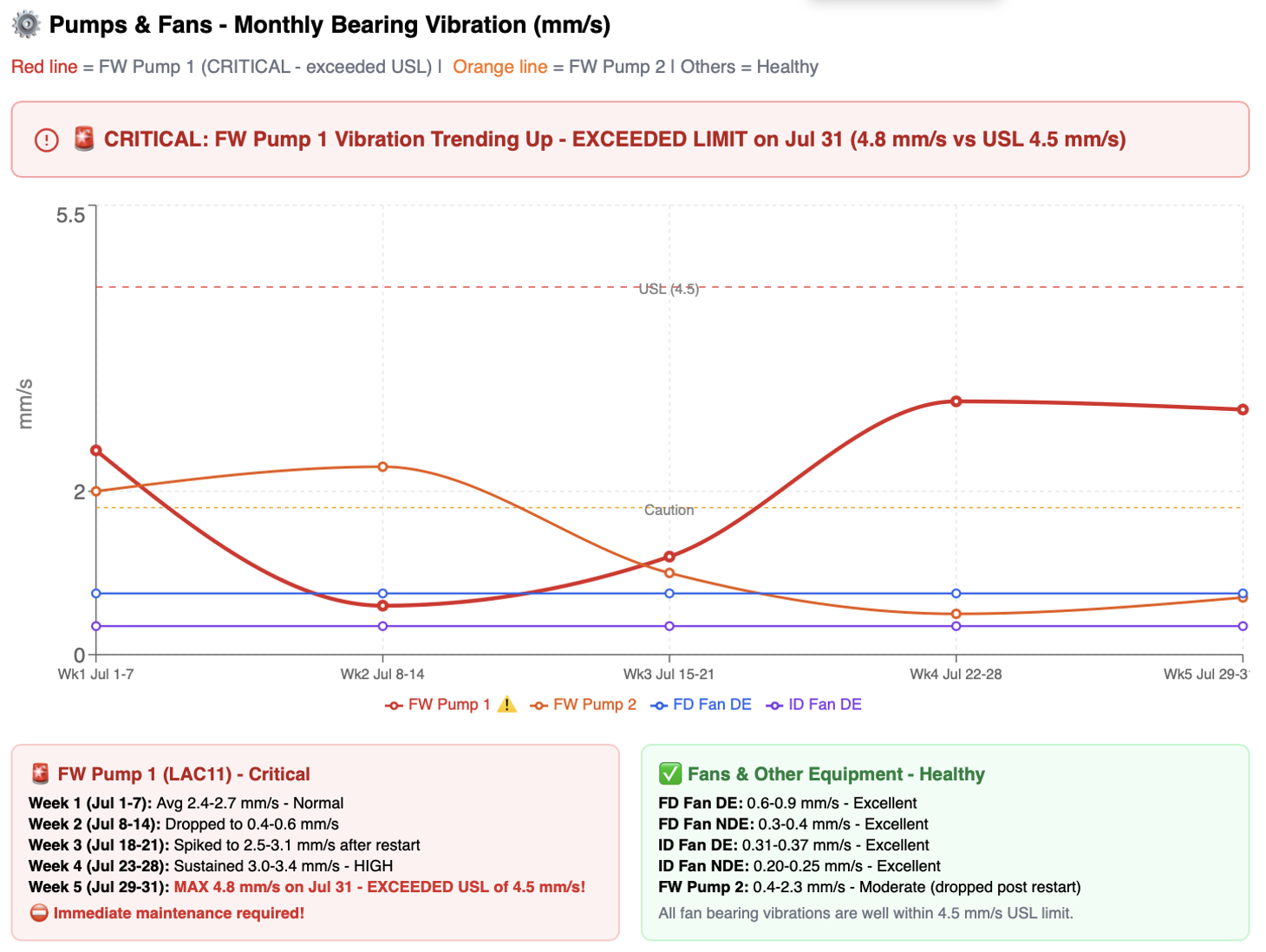
An AI assistant does not just display numbers—it interprets them in context, guiding shop floor workers toward immediate corrective actions.
- Predictive maintenance alerts: Detect subtle vibration trends before equipment breaches critical upper specification limits (USL).
- OEE optimization analysis: Assess shift-wise Availability, Performance, and Quality percentages to target bottleneck areas.
- Actionable operations advice: Receive explicit directives, like triggering an immediate maintenance workflow when a boiler pump begins to vibrate abnormally.
5. Breaking the Technology Barrier via Natural Language
The greatest barrier to smart factory technology isn’t data storage—it is user adoption. Conversational platforms allow any technician, supervisor, or engineer to converse with historians using plain English or native languages.
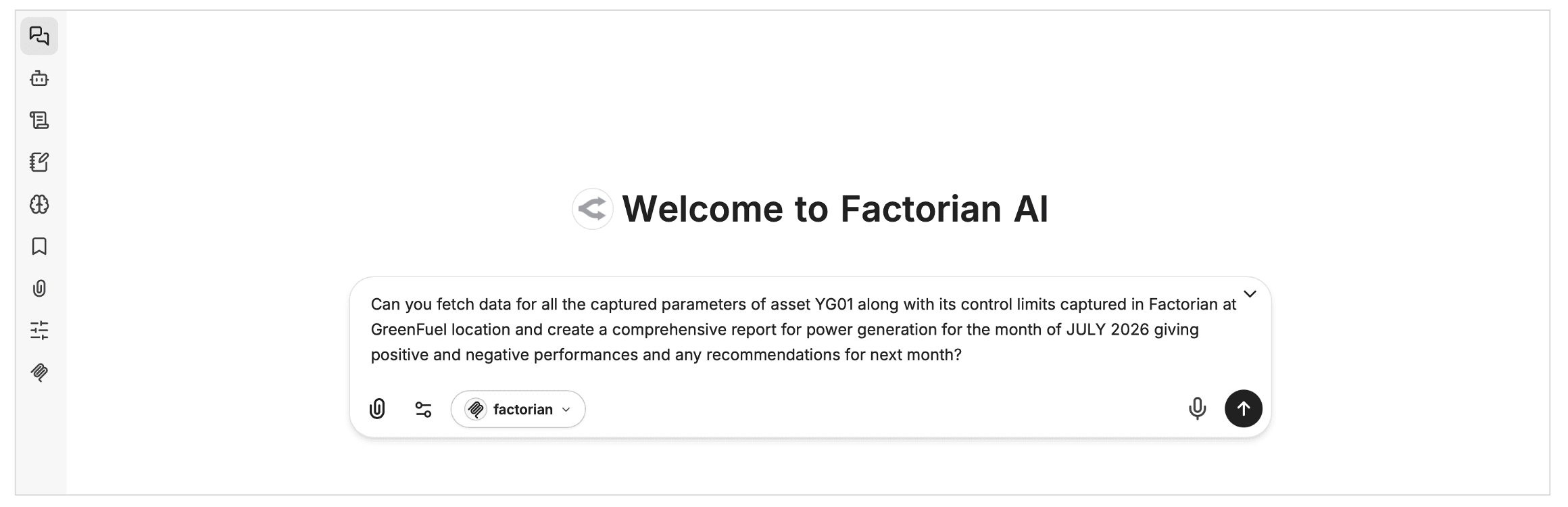
- Self-service querying: Type simple requests like “Can you fetch data from Boiler asset BL001 for the full month from July1 to July 31 and then plot boiler temperature for the month?” directly into platforms like Factorian AI.
- No code required: Extract complex interval-aggregated tag records without knowing SQL or Python.
- Democratised access: Give non-technical personnel the power to pull reports, configure dashboards, and diagnose failures independently.
The Bottom Line
By keeping a Human-in-the-Loop, AI acts as a digital co-pilot rather than an automated replacement. It handles the exhausting labor of data retrieval, aggregation, and synthesis. This frees shop floor teams to focus on what they do best: applying practical experience to make fast, informed decisions that keep production lines safe, efficient, and highly profitable.